Who Handles Tooth Extractions and Why It Matters
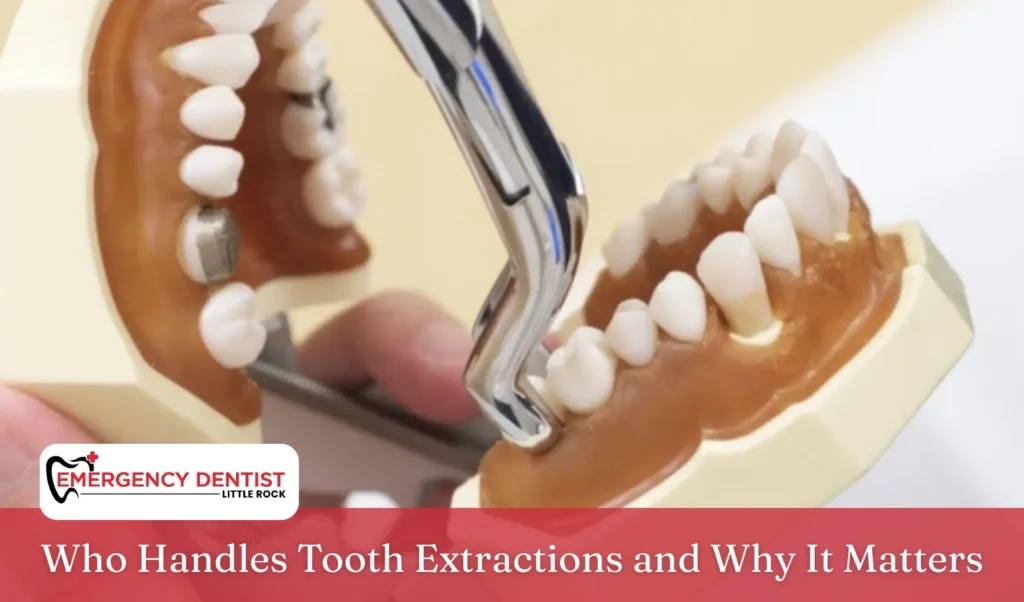
Quick Answer
Can a general dentist or emergency dentist perform a tooth extraction?
Yes. In many situations, a general dentist can perform an extraction, especially when it involves a simple tooth extraction and the tooth is fully erupted near the gum line. During dental emergencies, an emergency dentist may also be equipped to handle emergency tooth extractions when urgent care is needed. More complex cases may require referral to a specialist.
Key Takeaways
- General dentists can perform many routine tooth extractions
- Emergency dentists are equipped to handle urgent dental emergencies
- Complex cases may require oral and maxillofacial surgeons
- Prompt dental care can help prevent complications and protect oral health
Being told that a tooth may need to be removed can raise a lot of questions. Many patients ask, can a general dentist perform an extraction, or wonder what type of dentist does extractions when a dental issue suddenly becomes painful. Others may ask, will an emergency dentist extract a tooth if the situation feels urgent. These are common concerns, and understanding your options can make the process feel less stressful.
This guide explains who performs tooth extractions, how dentists decide on the right type of extraction, and when it’s important to seek professional care.

What Does Tooth Removal Mean
Tooth removal is a dental procedure that involves carefully removing the tooth from its position near the gum line. Dentists may recommend removing the tooth when a dental issue affects comfort, chewing, or overall oral health.
The type of extraction depends on several factors, including the condition of the tooth, the surrounding gum tissue, and whether the tooth is fully visible or impacted. Before removing the tooth, the dentist evaluates the area to determine the safest approach.
Can a General Dentist Perform an Extraction
Yes. In many cases, a regular dentist can safely remove a tooth. General dentists can perform extractions when the tooth is visible, stable, and suitable for a simple tooth extraction. This usually applies when the tooth has fully erupted and is easy to access above the gum line.
A general dentist can perform extraction techniques using local anesthesia to keep patients comfortable. These dental procedures are common in general dental offices and focus on protecting the surrounding gum tissue during healing. However, the exact approach depends on the tooth’s position and overall support.
What Type of Dentist Does Extractions for Complex Cases
Some extractions require advanced training. In complex cases, such as impacted wisdom teeth or teeth located below the gum line, treatment is often handled by oral and maxillofacial surgeons.
These specialists are trained in surgical procedures involving the jawbone and deeper tooth structures. If your regular dentist feels advanced care is needed, they will explain why and help coordinate your referral. This ensures you receive care from a provider equipped to handle more involved extractions safely.
Will an Emergency Dentist Extract a Tooth
Many patients ask, will an emergency dentist extract a tooth during urgent visits. In many dental emergencies, the answer is yes. An emergency dentist is trained to assess sudden pain, swelling, infection, or damage that cannot wait.
Emergency tooth extractions may be recommended when delaying care could worsen the dental issue. Emergency dental teams determine whether removing the tooth, stabilizing the area, or planning follow-up care is the best next step.

Common Reasons Dentists Recommend Tooth Removal
Dentists may discuss extraction when:
- Pain interferes with daily activities
- A tooth becomes loose, cracked, or damaged
- Swelling develops around the gum line
- A dental issue requires urgent attention
Every dental procedure is reviewed carefully, and treatment options are explained before any decision is made.
Practical Tips While Waiting for Care
If discomfort starts before your appointment, these steps may help:
- Avoid chewing on the affected side
- Choose soft foods
- Keep the area clean with gentle rinsing
- Follow any comfort guidance already provided
These steps may help protect the gum tissue until professional care is available.
When to Contact a Dentist
Reach out to a dentist promptly if you notice:
- Ongoing pain or swelling
- A cracked or loose tooth
- Signs of dental emergencies such as bleeding or pressure
Early care can help prevent complications and may also prepare the area for future options like dental implants, if needed.
Final Thoughts
Tooth extraction decisions can feel overwhelming, but knowing what type of dentist does extractions can help you feel more confident. Whether care is provided by a general dentist, emergency dentist, or specialist, the goal is always safe, supportive treatment tailored to your needs. If you’re unsure, continue reading trusted guidance and seek professional evaluation.
Fast Help for Dental Emergencies in Little Rock
If you’re experiencing sudden pain or a serious dental concern, an Emergency Dentist in Little Rock is here to help. Our team offers calm guidance and timely care for dental emergencies. Contact our clinic today to schedule your visit and protect your smile.
Frequently Asked Questions
Will an emergency dentist extract a tooth if I’m in pain?
Yes. During dental emergencies, an emergency dentist may remove a tooth when urgent care is needed.
What type of dentist does extractions for complex cases?
More complex cases, such as impacted wisdom teeth, are often treated by oral and maxillofacial surgeons.
Can a general dentist perform a simple tooth extraction?
Yes. General dentists can perform many routine extractions when the tooth is accessible and stable.