

Root Canal vs Extraction:
Choosing Your Best Option
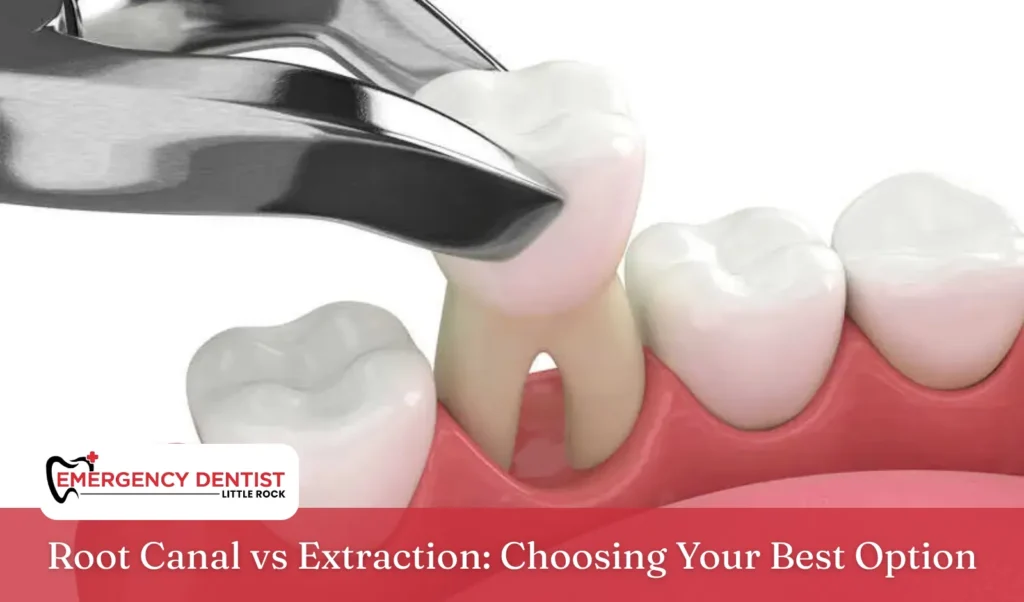
When a tooth becomes severely decayed, infected, or painful, your dentist may recommend one of two major treatments: a root canal or a tooth extraction. Both options can relieve discomfort, but they achieve it in different ways. Understanding root canal vs extraction can help you make the best decision for your long-term dental health and comfort.
What Is a Root Canal Procedure?
A root canal procedure is a dental procedure that aims to save your natural tooth rather than remove it. During this treatment, the dentist performs a procedure that involves removing the diseased or damaged tissue inside the tooth. This means removing the infected pulp from the canals to stop the spread of infection.
Once the pulp is removed, the dentist cleans and disinfects the inside of the tooth and fills the canals with a material called gutta percha to fill and seal the space. This prevents bacteria from returning and preserves the natural tooth structure. Root canal treatment protects your bite, maintains jawbone support, and allows you to keep your natural teeth.
What Happens During a Tooth Extraction?
A tooth extraction is a straightforward treatment that removes the entire tooth. Dentists often recommend this option when a tooth is too damaged to fix or could harm surrounding teeth. Before the procedure begins, the dentist starts by numbing the area to keep you comfortable.
Once the tooth is removed, you are left with an empty space, which may need to be restored later. After healing, many people choose a bridge or implant to regain normal chewing and prevent shifting teeth. Although extractions are usually quick, they often require replacement options to protect long-term dental function.
Root Canal vs Tooth Extraction: Important Differences
When comparing extract tooth vs root canal, it’s helpful to look at what each procedure offers.
A root canal focuses on saving the tooth by treating damage from the inside. Through root canal therapy, the dentist removes the infection while keeping the tooth in place. This helps preserve jawbone health and prevents teeth from drifting.
A tooth extraction involves removing the entire tooth, which can be necessary when damage is severe. Although extraction may be simpler, it often requires follow-up treatment, such as an implant or bridge, to replace the missing tooth.
While a root canal may cost more initially, it may be more affordable long-term because you avoid the added cost of tooth replacement. Your dentist can help you decide based on your tooth’s condition and your personal preferences.
When a Root Canal Is the Right Choice
A root canal is often recommended when:
- The tooth’s structure can still be saved
- You want to save your natural tooth
- The infection hasn’t spread beyond the pulp
- Long-term alignment and stability are priorities
Root canals are ideal for maintaining your natural teeth and preventing complications that come from missing teeth.
When Extraction May Be the Better Option
Extraction may be recommended when:
- The tooth is cracked beyond repair
- There is severe decay that cannot be restored
- You’re planning a future bridge or implant
- You want a faster solution with fewer steps
In these cases, extraction vs root canal may favor removing the tooth to prevent further issues.

Restoring Your Smile After Extraction
After a tooth is removed, it’s important to restore the empty space left behind. Missing teeth can cause shifting, bite problems, and bone loss. Replacement options include:
- Dental implants
- Dental bridges
- Partial dentures
These treatments help restore function and protect the shape of your smile.
Long-Term Oral Health Considerations
Thinking about tooth root canal vs extraction means considering long-term health. A root canal allows you to keep the natural tooth, supporting jawbone strength and preventing misalignment. An extraction may be necessary, but leaving the gap unfilled can lead to long-term dental issues.
Need Help Fast? Call an Emergency Dentist in Little Rock
If you’re experiencing tooth pain, swelling, or signs of infection, reach out to an Emergency Dentist in Little Rock immediately. Quick treatment can determine whether root canals or tooth extractions are needed, and early action gives you the best chance of keeping your natural tooth.
Conclusion
Choosing between canal vs extraction depends on your tooth’s condition, long-term goals, and your dentist’s advice. Root canals are often ideal when the tooth can still be saved, while extractions are best when repair is no longer possible. Whichever option you choose, prompt care protects your comfort, function, and overall dental health.